
Tag: ALPHA-g
-
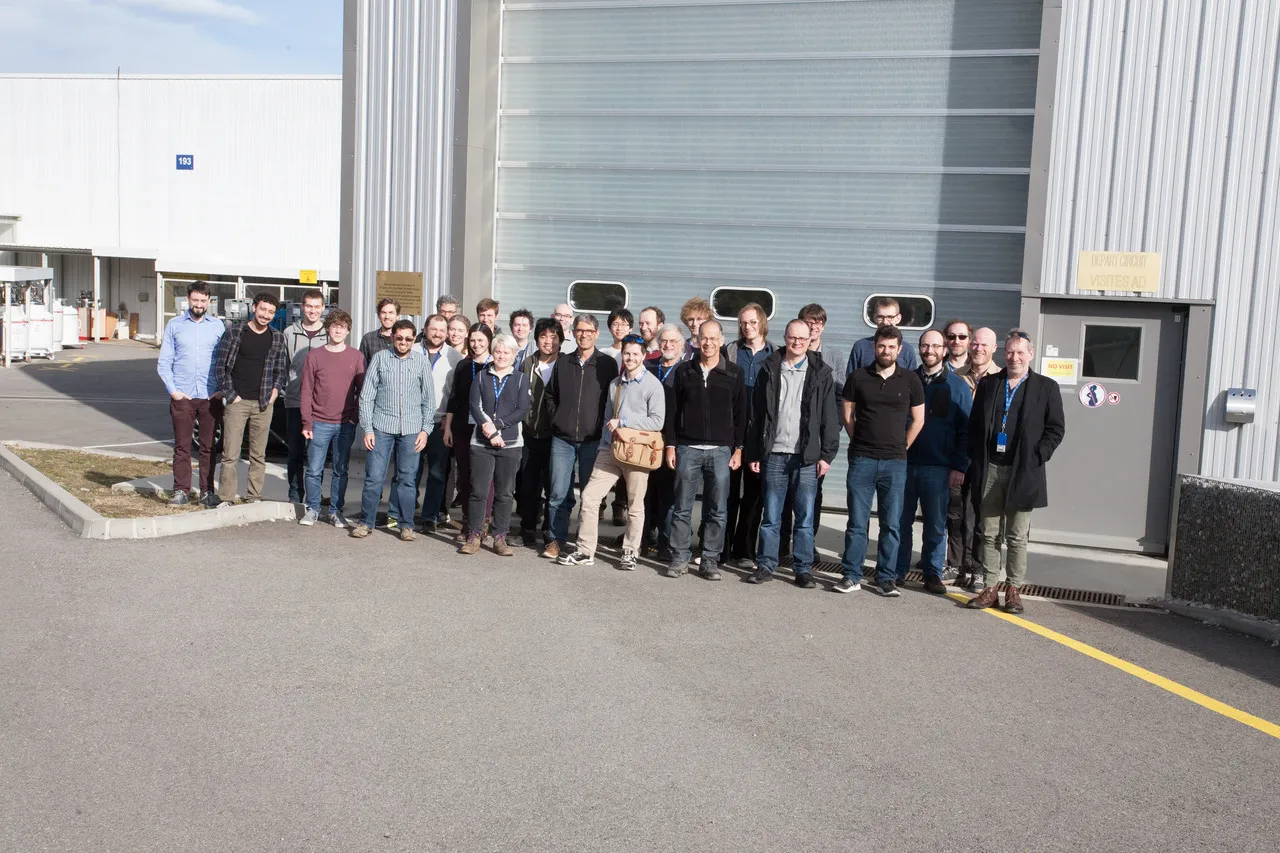
People at Work (2018)
People at Work (2018)
-
Positron Accumulation
Positron Accumulation The Positron Accumulator has a trap composed of a 0.14 T solenoid magnet and 7 cylindrical electrodes. The first two electrodes are narrow, with a diameter of 12.7 mm each. The third electrode has a diameter of 30.5 mm, and the last four electrodes are the widest, at 200.7 mm each. Pure nitrogen
-
Barrel Scintillator for ALPHA-g
Barrel Scintillator for ALPHA-g Composed of 64 trapezoidal scintillating bars arranged in a barrel shape. Each bar is readout at each end with SiPM sensors for a total of 128 channels. The "Barrel Scintillator" encapsulates the radial TPC in order to identify cosmic rays. The barrel length is about 2.5m, with a diameter of 0.5m.
-
Radial Time Projection Chamber (rTPC)
Radial Time Projection Chamber (rTPC) rTCP – what's that? It's a component in ALPHA-g! The turquoise cables are fibreoptic data lines to communicate to the microchips on the detector. Click here for more information about the TCP
-
ALPHA-g Assembly – Phase 2
ALPHA-g Assembly – Phase 2 In the second Assembly Phase of ALPHA-g we working round the clock to put antimatter into the machine. Click here for part 1
-
Insertion of ALPHA-g – Phase 1
Insertion of ALPHA-g – Phase 1 These are the first pictures of our assembling phase for ALPHA-g. We actually needed to use climbing equipment & harnesses to be able to built it safely. Click here for part 2
-
The ALPHA-g Antihydrogen Gravity Magnet System
The ALPHA-g experiment at CERN aims to perform the first-ever precision measurement of the weight of antimatter, using antihydrogen atoms confined in a magnetic trap. In the measurement, anti-atoms are allowed to escape through either a lower or an upper port in the trap, the up-down balance of which depends on gravity and the trap
-
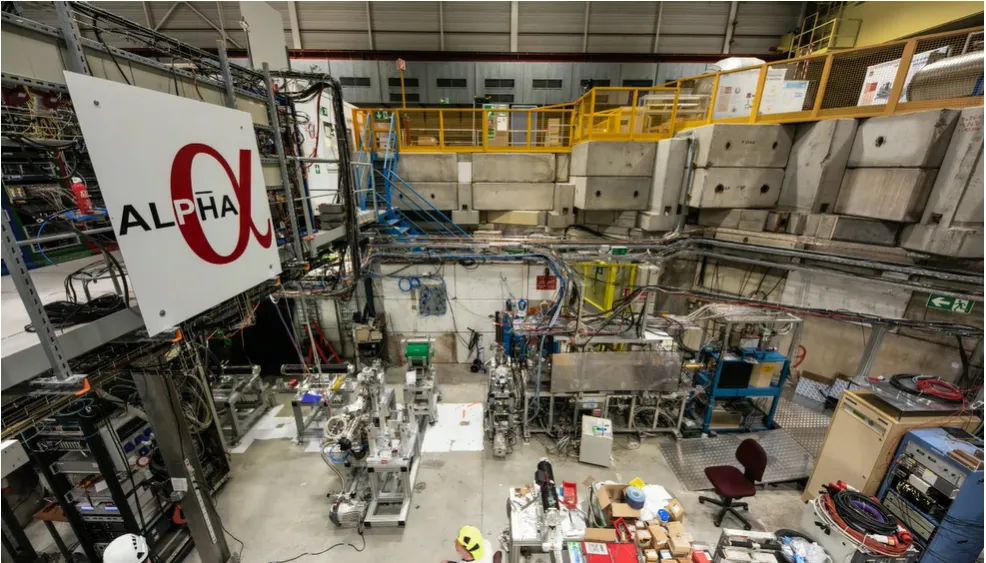
Timelapse of the ALPHA-g addition to the ALPHA Experiment
In 2018 the ALPHA Experiment was expanded with the addition of ALPHA-g. To deliver antiparticles to both ALPHA-g and ALPHA 2 (Spectroscopy trap) a beamline to transport both antiprotons and positrons was also installed. The timelapse videos below show the massive changes, from installation of the beamline, to the addition of new equipment platforms (in
-
Design and Commissioning of Beamlines for the ALPHA Antihydrogen Experiment
One of the greatest problems facing modern physics is the apparent asymmetry between matter and antimatter. While the standard model of particle physics predicts that equal amounts of matter and antimatter were produced following the Big Bang, astronomical observations have revealed that our universe contains little or no primordial antimatter. Precision measurements of cold, trapped
-
Prospects for comparison of matter and antimatter gravitation with ALPHA-g
The ALPHA experiment has recently entered an expansion phase of its experimental programme, driven in part by the expected benefits of conducting experiments in the framework of the new AD + ELENA antiproton facility at CERN. With antihydrogen trapping now a routine operation in the ALPHA experiment, the collaboration is leading progress towards precision atomic


