
Tag: ALPHA-g
-
Dr. Lars Martin
Dr. Lars Martin Researcher Support Physicist Currently working on: Commissioning of the ALPHA-g detector systems, including services and DAQ Research Interests: Particle detection and tracking, photon detection Affiliation
-
Detecting antihydrogen annihilations in ALPHA-g for measurement of gravitational free fall
Antihydrogen, the bound state of an antiproton and a positron, is an ideal system for testing fundamental symmetries between matter and antimatter. The Antihydrogen Laser PHysics Apparatus (ALPHA) at CERN has a proven history of producing and trapping antihydrogen atoms, with many precision tests of charge-parity-time (CPT) symmetry. The new ALPHA-g apparatus extends this program
-
First Measurement of Antihydrogen Free Fall Using a Radial Time Projection Chamber
Using antihydrogen, an apparatus known as ALPHA-g was designed to test Einstein’s Weak Equivalence Principle (WEP), where the acceleration due to gravity that a body experiences is independent of its structure or composition. A measurement of the gravitational mass of antimatter has never been done before, as previous experiments used charged particles, which meant the
-
Magnetic Field Characterisation for Gravitational Free Fall Measurements of Antihydrogen in the ALPHA-g Experiment
The bound state of an antiproton and positron, antihydrogen, is an ideal test particle for comparisons between matter and antimatter as hydrogen has been studied extensively through history both experimentally and theoretically. The Antihydrogen Laser Physics Apparatus (ALPHA) collaboration has made significant progress on antihydrogen trapping, cooling, and spectroscopy in recent years.In a new apparatus,
-
Observation of the effect of gravity on the motion of antimatter
Einstein’s general theory of relativity (GR), from 19151, remains the most successful description of gravitation. From the 1919 solar eclipse2 to the observation of gravitational waves3, the theory has passed many crucial experimental tests. However, the evolving concepts of dark matter and dark energy illustrate that there is much to be learned about the gravitating
-
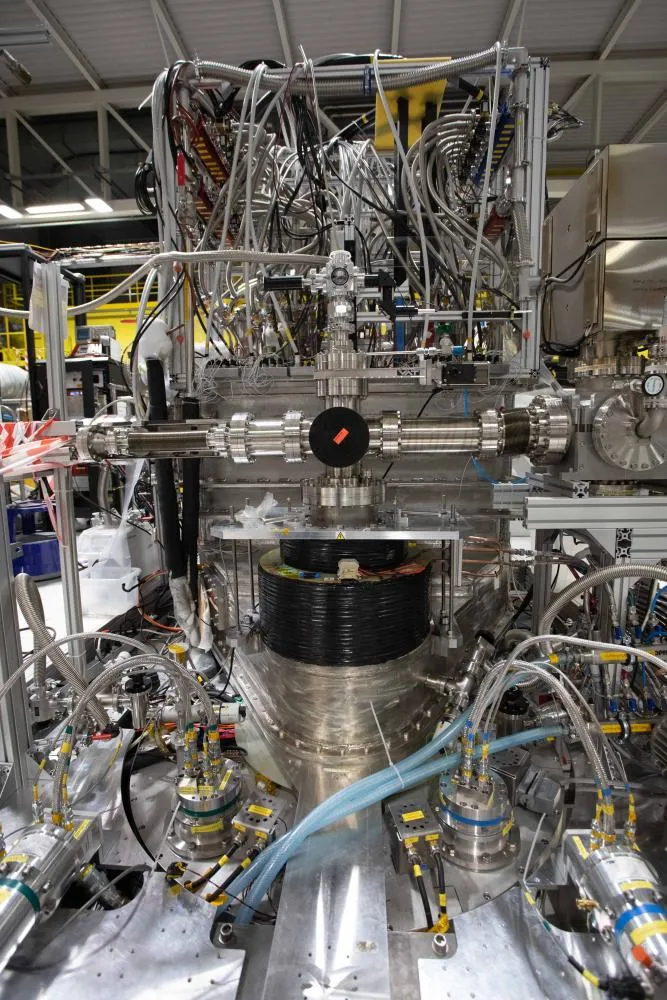
First results from ALPHA-g: Antihydrogen doesn’t fall up!
Today ALPHA released the first set of results from the ALPHA-g apparatus that was added to the ALPHA setup in 2018. In a paper published in Nature today, ALPHA describes how we have observed the effect of gravity on neutral antimatter during its release from our magnetic bottle. To get an impression of how the
-
Measuring the Properties of Antihydrogen
This thesis describes the latest results of the on-going efforts to measure the properties of antihydrogen within the ALPHA collaboration. More specifically, it covers the construction and commissioning of the ALPHA-g experiment [1], and the plans to measure how antimatter behaves in Earth’s gravitational field. A special emphasis is on the ALPHA-g magnet system used
-
Time Projection Chamber (TPC)
Time Projection Chamber (TPC) The particle tracking detector for the ALPHA-g experiment. A unique radial TPC that will be used in a measurement of the effect of gravity on antihydrogen.
-
Detectors
Detectors ALPHA has two detector systems that can reconstruct the origin point of an antiproton annihilation. The two detectors have differing technologies. The Silicon Vertex Detector (SVD) is dedicated to the ALPHA 2 experiment, and the Time Projection Chamber (TPC) is dedicated to the ALPHA-g experiment. Both detectors are custom made and unique to ALPHA.
-
Beamline
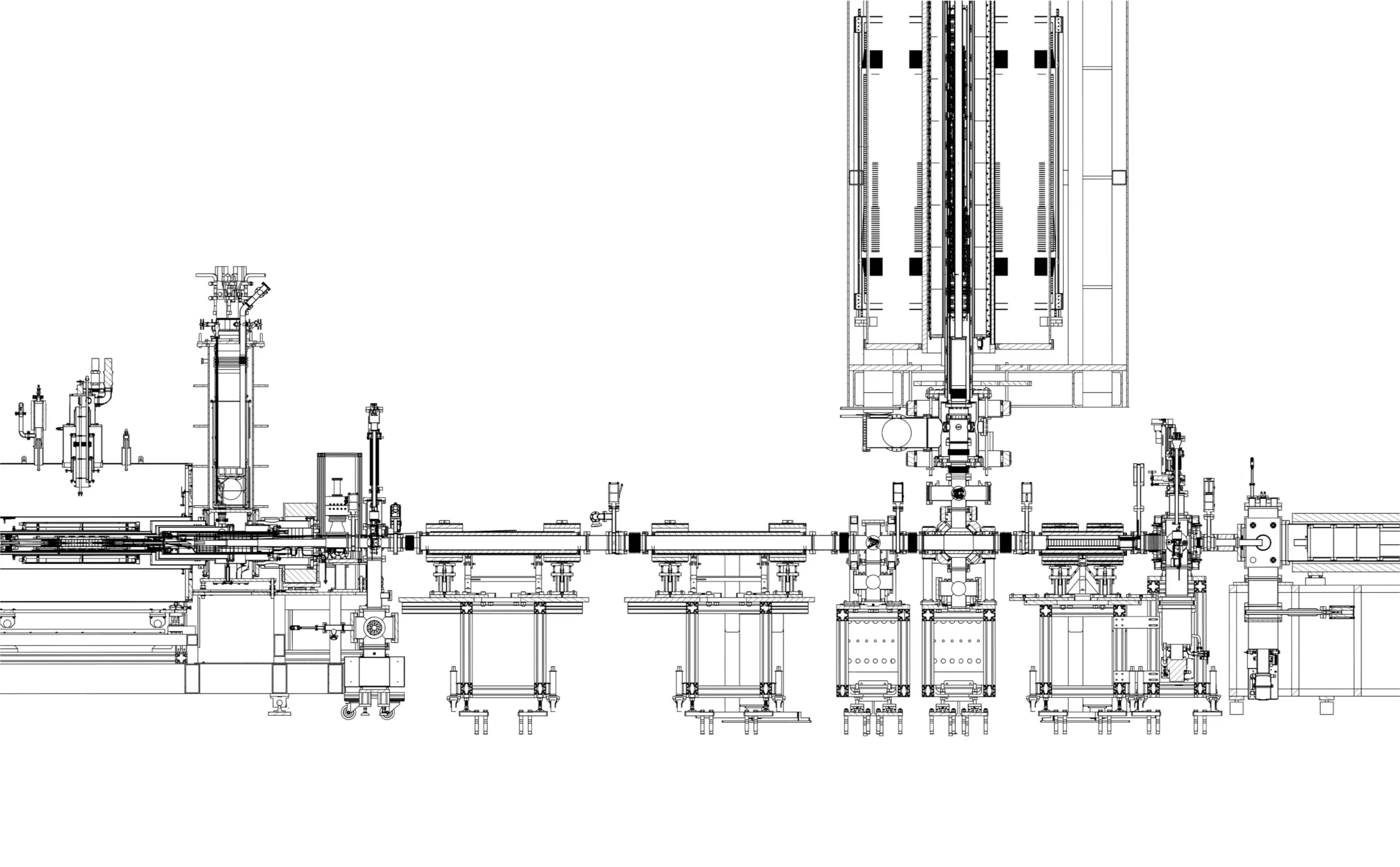
Beamline The interconnecting system used to transport antimatter between ALPHA 2 and ALPHA-g.