
Tag: Positron Accumulator
-
Positron Accumulator
Positron Accumulator Component Type Positron Accumulator Using a sodium source, we collect positrons in order to make antihydrogen. How it works ALPHA derives its positrons from a radioactive beta-decay source containing an isotope of sodium, Na-22. This isotope, which has a conveniently long half-life of about 2.6 years, emits positrons with a large spread of
-
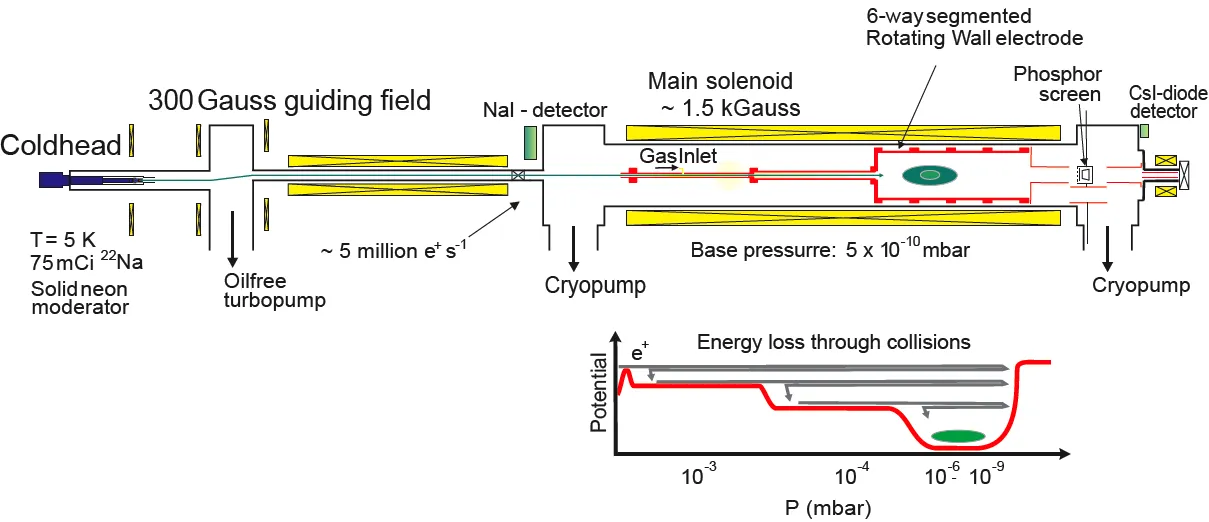
Positron Accumulator
Positron Accumulator Using a sodium source, we collect positrons in order to make antihydrogen. ALPHA derives its positrons from a radioactive beta-decay source containing an isotope of sodium, Na-22. This isotope, which has a conveniently long half-life of about 2.6 years, emits positrons with a large spread of kinetic energies up to about 545 keV.
-
Positron Accumulation
Positron Accumulation The Positron Accumulator has a trap composed of a 0.14 T solenoid magnet and 7 cylindrical electrodes. The first two electrodes are narrow, with a diameter of 12.7 mm each. The third electrode has a diameter of 30.5 mm, and the last four electrodes are the widest, at 200.7 mm each. Pure nitrogen
-
Positron Source
Positron Source Positrons in ALPHA originate from a radioactive isotope of sodium Na-22. The Na-22 source is manufactured at iThemba Labs in Cape Town, South Africa and then shipped in a special container to CERN following international protocols for the transport of radioactive substances. Na-22 has a long half-life of 2.6 years, and therefore emits
-
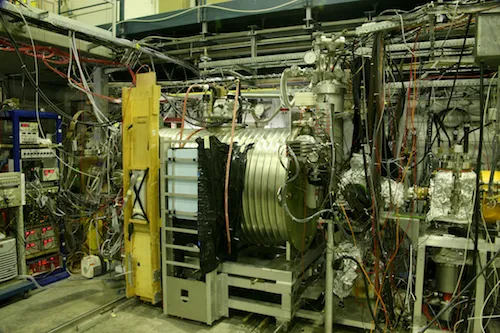
External View of the ALPHA Experiment
External View of the ALPHA Experiment This gallery shows you an external view of the ALPHA 1 Experiment, more specific the ALPHA 1 Apparatus, the Positron Accumulator, how the Atom Trap Magnet was installed and the Penning Trap.
-
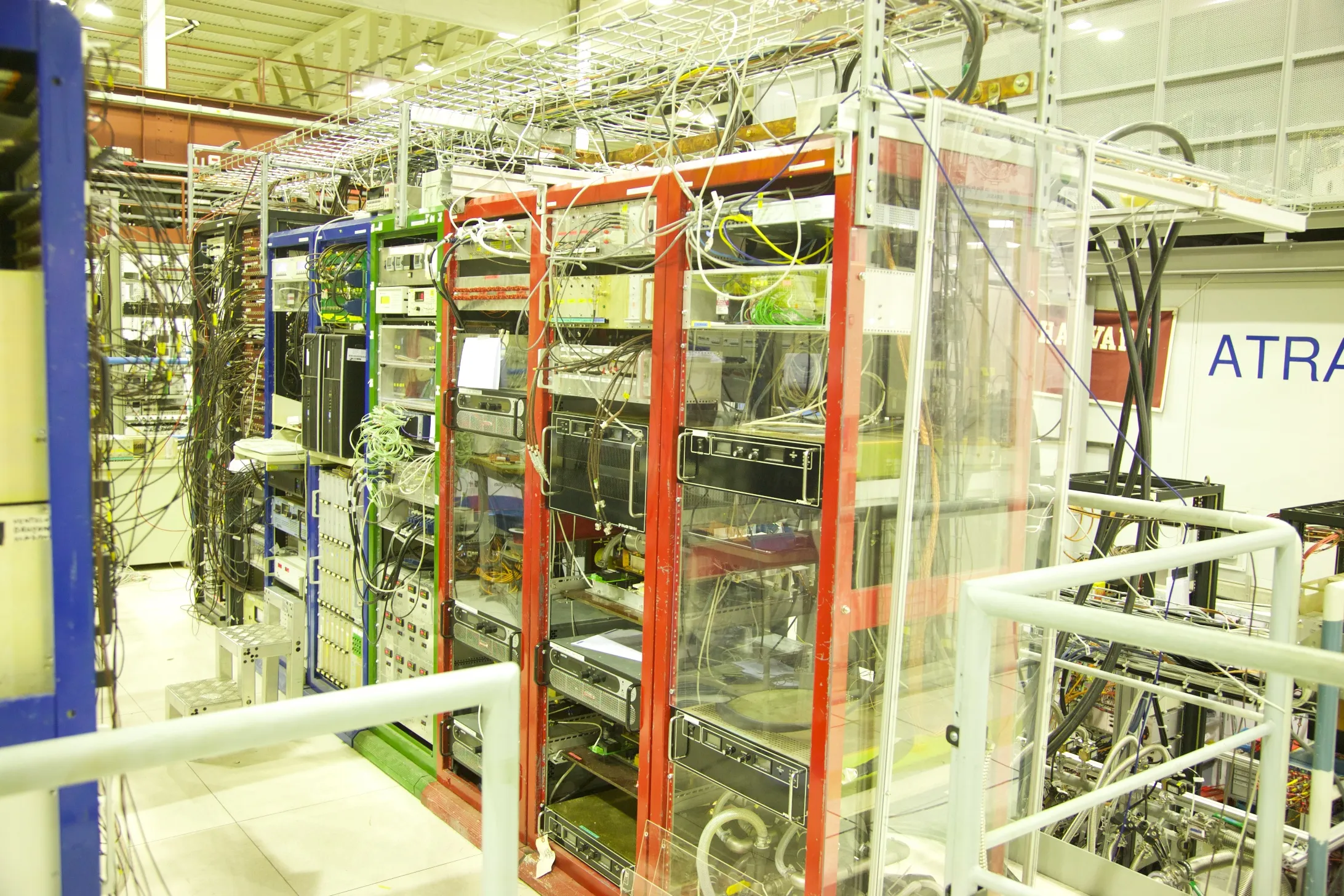
Views of ALPHA 2
Views of ALPHA 2 Get an overview of ALPHA 2: Here you can see the Magnet Control Racks, the Detector Readout Racks, the Positron Accumulator and other views of ALPHA 2 in general.