
Category: Component Of Alpha
-
Time Projection Chamber (TPC)
Time Projection Chamber (TPC) The particle tracking detector for the ALPHA-g experiment. A unique radial TPC that will be used in a measurement of the effect of gravity on antihydrogen. The size of the ALPHAg apparatus led ALPHA to choose a different annihilation detection technology from ALPHA 2. Using a radial Time Projection Chamber (rTPC)
-
Silicon Vertex Detector (SVD)
Silicon Vertex Detector (SVD) The particle tracking detector that allows us to see antihydrogen annihilations inside ALPHA2. The SVD is constructed from 72 ‘hybrid modules’ these modules contain the silicon sensor and dedicated microchips to readout the signals. The hybrid modules segment the sensor into 256 strips on each side, effectively working like 65536 pixels.
-
Detectors
Detectors ALPHA has two detector systems that can reconstruct the origin point of an antiproton annihilation. The two detectors have differing technologies. The Silicon Vertex Detector (SVD) is dedicated to the ALPHA 2 experiment, and the Time Projection Chamber (TPC) is dedicated to the ALPHA-g experiment. Both detectors are custom made and unique to ALPHA.
-
Atom Trap
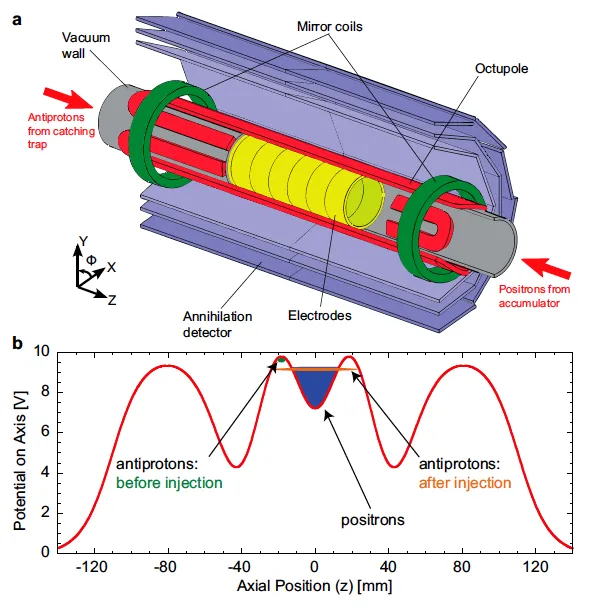
Atom Trap With a combination of magnets, we can hold antihydrogen in our apparatus without touching it The central region of the electrode stack is where the ‘magic’ happens. These electrodes comprise the mixing trap: it is here that the antiprotons and positrons finally meet. The plasmas are transferred into this region and are held
-
Penning Trap
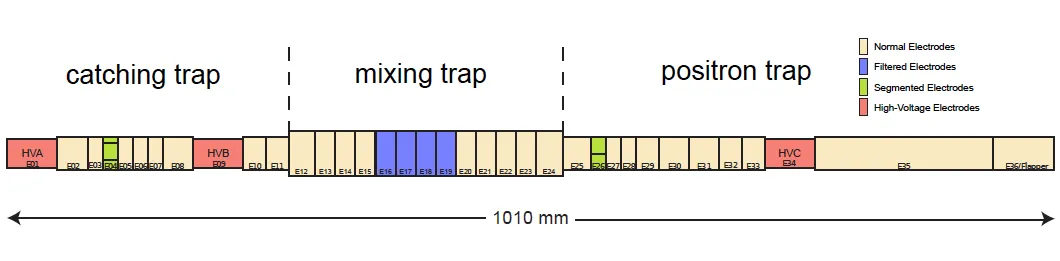
Penning Trap The charged particle trap, capable of holding electrons, positrons and antiprotons in a vacuum. The ALPHA electrode stack is comprised of 35 electrodes. Made from aluminum and plated with gold, the electrodes are 36.6mm to 44.6mm in diameter and have varying lengths. The trap electrodes are mounted inside of a vacuum chamber surrounded
-
Traps
Traps In order to study antimatter, we need to hold it without touching it with matter. We have various traps to hold the various ingredients needed for making antihydrogen in a vacuum.
-
Beamline
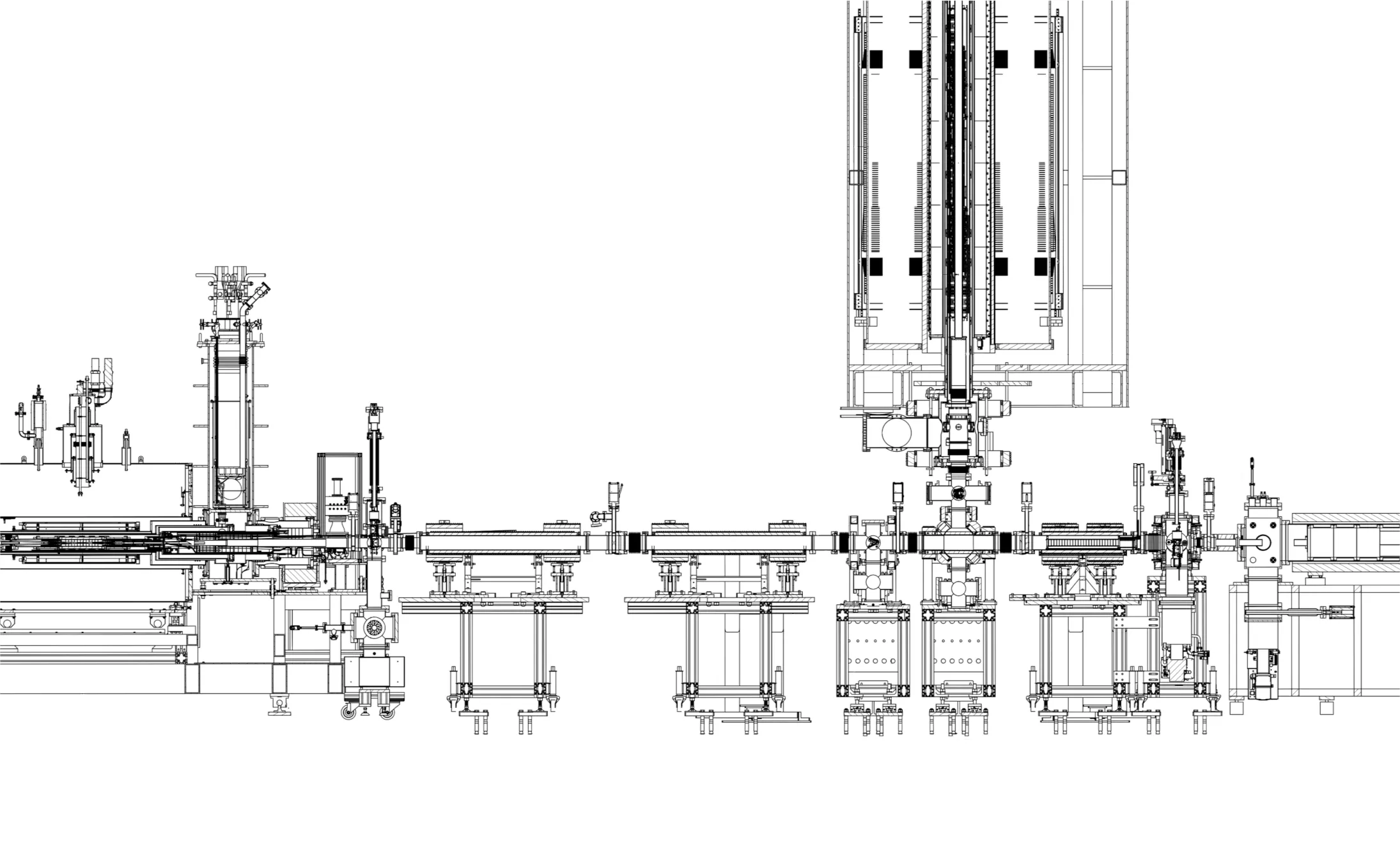
Beamline The interconnecting system used to transport antimatter between ALPHA 2 and ALPHA-g. ALPHA produces antihydrogen by slowly merging clouds of positrons and antiprotons inside specially designed Penning traps, found at the centres of the ALPHA 2 and ALPHA-g experiments. During each experimental cycle, positrons and antiprotons must be transferred into these parts of the
-
Positron Accumulator
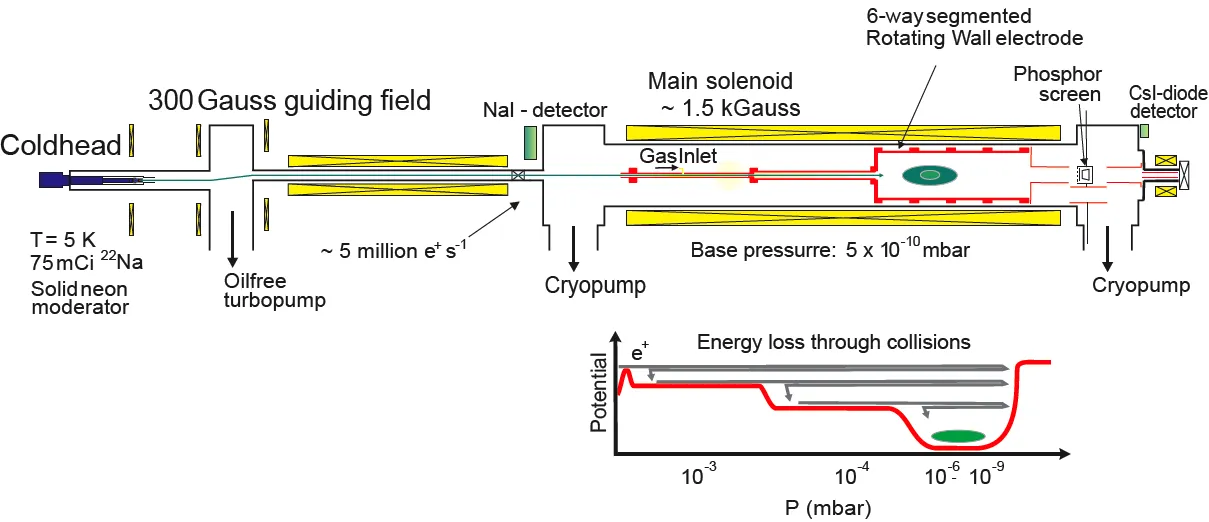
Positron Accumulator Using a sodium source, we collect positrons in order to make antihydrogen. ALPHA derives its positrons from a radioactive beta-decay source containing an isotope of sodium, Na-22. This isotope, which has a conveniently long half-life of about 2.6 years, emits positrons with a large spread of kinetic energies up to about 545 keV.
-
Annihilation Detector
Annihilation Detector ALPHA has two detector systems that can reconstruct the origin point of an antihydrogen annihilation. The two detectors have differing technologies. The Silicon Vertex Detector (SVD) is dedicated to the ALPHA 2 experiment, and the Time Projection Chamber (TPC) is dedicated to the ALPHAg experiment. Both detectors are custom made and unique to
-
Penning Trap
Penning Trap It is a basic and unavoidable fact in the antimatter business that in order to produce antihydrogen, antiprotons and positrons must be mixed. So, ALPHA must have the ability to confine and manipulate charged plasmas with reasonable efficiency and at cryogenic temperatures to boot! It is a basic and unavoidable fact in the