EXPERIMENTAL CYCLE
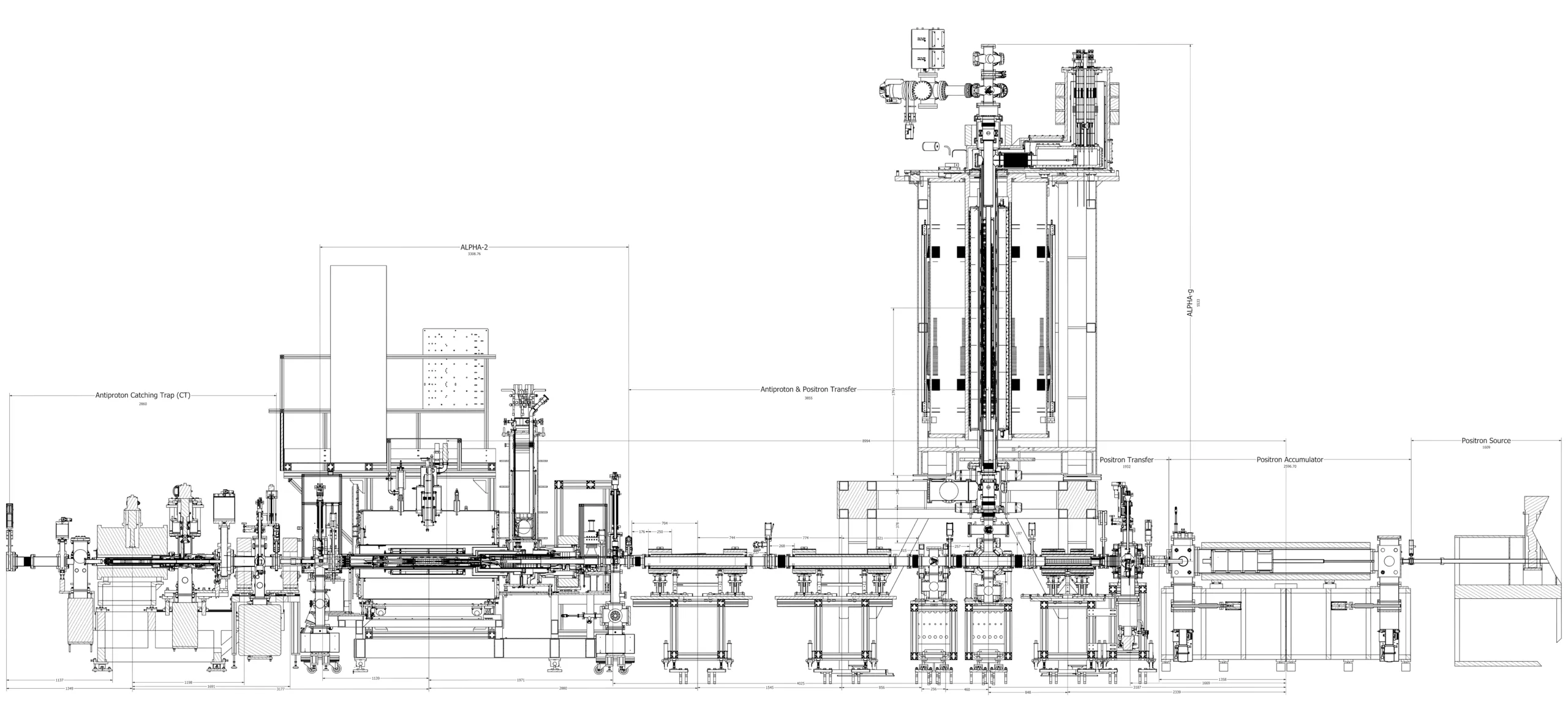
ALPHA is not just one apparatus. The apparatus consists of different sub-elements, which are all produced and maintained by experts from around the world. At CERN we then rebuild these components and make the whole experiment work together.
Related physics: Antimatter, Antiproton
Related equipment: AD
Related physics: Penning Trap
Related equipment: Catching Trap, Penning Trap
(with electrons)
Related physics: Plasma physics, electron cooling, rotating wall, evaporative cooling, SDREVC (rotating wall with evaporative cooling)
Related equipment: Penning Trap
Related physics: Plasma physics, evaporative cooling, sympathetic cooling (Be+), Laser cooling
Related equipment: Beryllium source, Beryllium ablation laser, Beryllium cooling laser
Related physics: MCP, Detectors, Faraday cup
Related equipment: MCP, Detectors, Faraday cup
(Destructive step… so start over!)
Related physics: Antihydrogen, Mixing
Related equipment: Atom trap
Related physics: Antihydrogen, loffe-pritchard trap
Related equipment: Atom trap
Time to perform an experiment!
Related physics: LyALPHA Laser, 243nm-Laser, Microwaves, Gravity Measurements, Charge of antihydrogen
Related equipment: LyALPHA Laser, 243nm-Laser, Microwave generator
Related physics: Annihilation, Detectors
Related equipment: SVC, TPC
Turn of the atom trap to see what’s left over
Related physics: Annihilation, Detectors
Related equipment: SVC, TPC, Atom Trap